
The team painted our kitchen cabinets, and we couldn’t believe the difference. The doors and drawers have a smooth, factory-like finish, and the new color made our entire kitchen feel more modern.
Brick & Masonry Painting in Pasadena, CA
Pasadena Elite Painting is Los Angeles County's trusted expert in brick and masonry painting, specializing in breathable masonry paint systems, elastomeric brick coatings and limewash finishes for stucco and block. We offer efflorescence assessment and mortar condition evaluation before any coating goes on the wall.
Our team provides full surface preparation including caulking and stain removal, delivering lasting curb appeal for homes and durable protective coatings for both residential and commercial masonry. Fully licensed (CSLB #585047), insured and bonded, we handle everything from a single chimney repaint to a full masonry facade.
From selecting a vapour-permeable coating that will not trap moisture behind the wall to holding even coverage across a coarse block texture, our team handles every detail. Serving Pasadena, South Pasadena, Altadena and San Marino, we ensure fast, efficient service and deliver reliable, professional and breathable results on every masonry painting project.
- Efflorescence checked before coating
- Mortar condition assessed first
- Breathable systems by default
- Licensed, insured and bonded
Reviews
What clients say about our masonry work
Friendly service, beautiful results, and great attention to detail.
Pasadena Elite Painting repaired several damaged areas of drywall before repainting our bedroom. The repaired sections blend perfectly with the surrounding walls, and the finished room looks clean and polished.
The exterior paint had faded badly from years of sun exposure. After the project was completed, our home had stronger curb appeal and a fresh, updated appearance. The trim work looks especially sharp.
Our bathroom painting project came out beautifully. Clean edges and a flawless finish!
We needed our office repainted without creating a major disruption for employees. Pasadena Elite Painting handled the project efficiently and gave the entire workspace a brighter, more professional appearance.
The painters took great care around our furniture, flooring, and fixtures. Our walls and ceilings look fantastic, and there were no drips or messy edges left behind.
Our new accent wall looks perfect. It completely changed the feel of the room.
01
What we fix and what we coat
Pasadena's housing stock runs heavy on stucco, and a good share of it sits on or beside brick foundations, chimneys, garden walls and porch piers that were never meant to stay bare forever.
- Exterior brick chimneys and fireplaces that have started chalking or fading.
- Block and brick retaining walls, garden walls and property-line walls.
- Stucco-over-masonry transitions where cracking has started along the seam.
- Brick porch piers and columns on Craftsman-era homes across Bungalow Heaven and Garfield Heights.
- Painted brick that is peeling or blistering from a prior non-breathable coating.
- Masonry showing efflorescence, the white powdery mineral bloom that migrates out through brick and block as moisture moves through the wall.
Before we recommend a coating we check two things that decide the outcome: whether the wall is actively efflorescing, which points at ongoing moisture movement, and whether the mortar joints need repointing before anything goes over them. Painting over failing mortar hides a structural problem under a fresh colour, and it reappears within a season or two.
Coating options for brick and masonry
| Coating type | Breathability | Best for | Typical look |
|---|---|---|---|
| Masonry paint, acrylic based | Moderate | Brick and block in good condition with no active moisture issue | Flat and uniform |
| Elastomeric coating | Lower, but with crack-bridging elasticity | Stucco-over-masonry transitions and hairline cracking on sound, dry walls | Slightly textured and opaque |
| Limewash and mineral silicate | Highest, fully vapour permeable | Historic masonry, lime plaster and brick that has to breathe | Soft, variegated, matte |
| Bonding primer plus acrylic | Moderate | Previously painted brick where the existing film is still sound | Flat, matching the previous finish |
| Breathable mineral over treated efflorescence | Highest | Walls that have bloomed salts and still need to release moisture | Matte, slightly open |
A non-breathable film on brick or block traps moisture behind the wall instead of letting it evaporate out, which accelerates spalling, the surface of the brick flaking and crumbling away. That is why we default to breathable systems on a masonry substrate and reserve sealed film coatings for surfaces that are genuinely dry year round. It is also why the peeling painted brick we get called to look at is so often a coating problem rather than a workmanship problem.
02
What shapes your masonry painting project
A single chimney repaint and a two-storey brick facade are different jobs in more than scale. These are the factors that decide the preparation and the time.
Surface condition
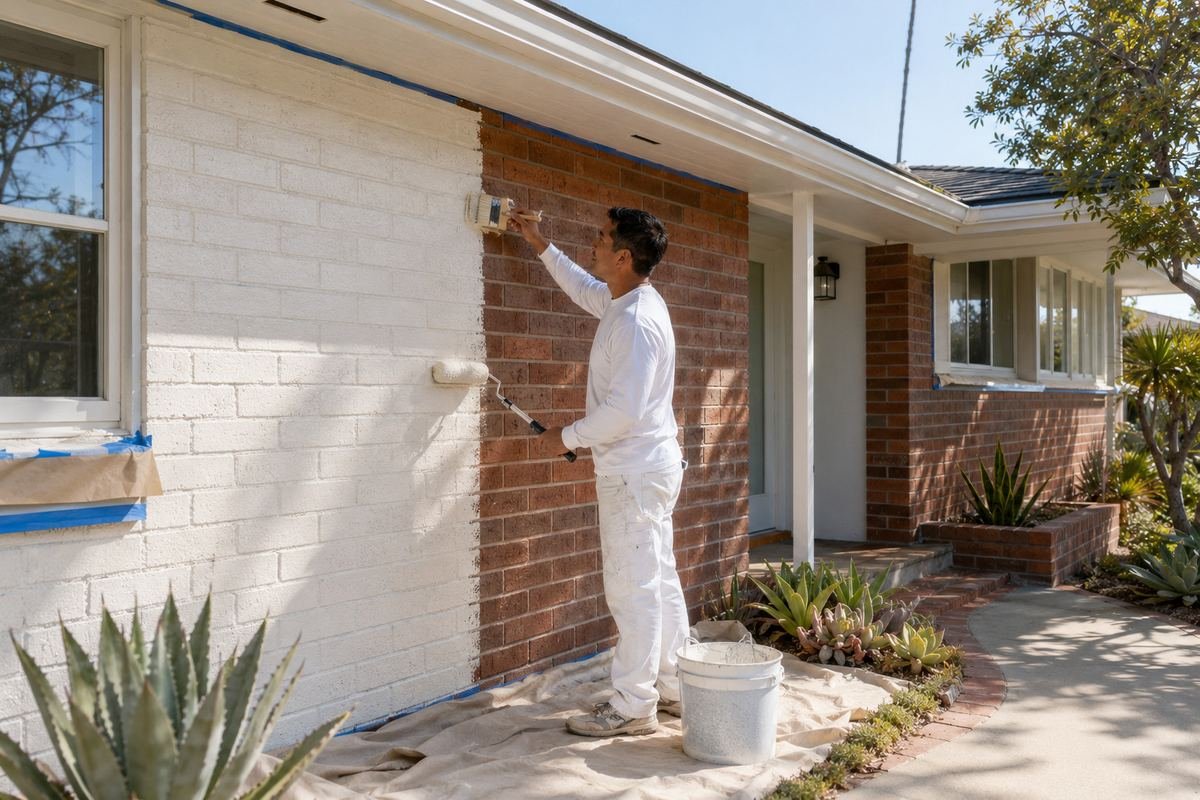
Sound, clean masonry needs far less preparation than a wall with active efflorescence, spalling brick or failing mortar joints that have to be repointed first. Condition, not size, is usually what moves the scope.
Coating and coats
Limewash builds opacity gradually across several thin coats. A masonry paint on sound brick moves faster. Elastomeric, masonry paint and limewash each have their own application requirements and cure times, and they are not interchangeable.
Preparation and access
Pressure washing, efflorescence treatment, caulking at transitions and masking around windows, roofing and planting all happen before the first coat. A two-storey chimney or a wall behind mature planting takes longer to reach safely than a ground-level garden wall.
We walk every one of those factors with you on site before quoting anything, and the written estimate names the preparation, the system and the number of coats for your actual wall rather than a generic scope.
03
How the process works
Five steps. The first one is the one that stops a masonry job failing quietly six months after the crew has gone.
On-site walk-through
We inspect the masonry, check for efflorescence and mortar condition, and identify any prior coating that has to be dealt with. Where the wall is holding moisture we trace where the water is getting in before talking about products.
Written scope and coating recommendation
You get a plan naming which system fits your wall and why. Where repointing is needed it goes in as a prerequisite rather than being quietly skipped, since it is masonry repair rather than painting.
Surface preparation
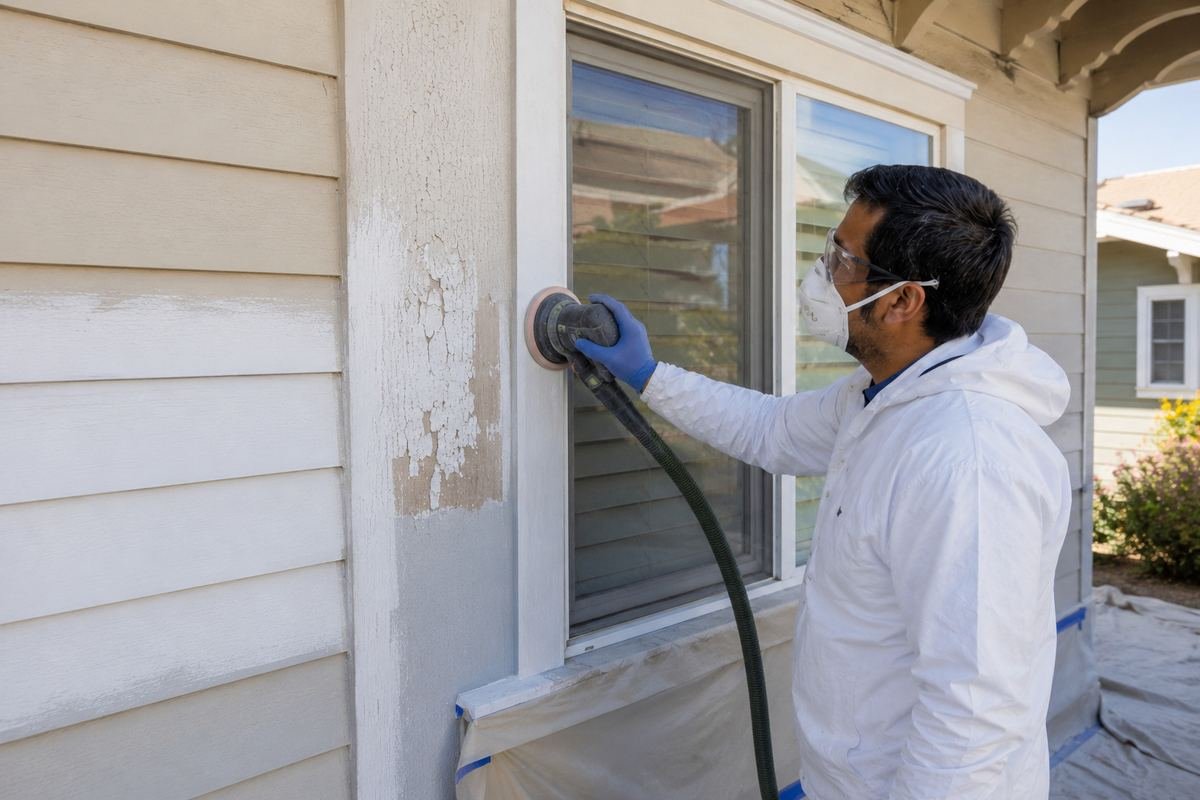
Pressure washing at a pressure the masonry can take, efflorescence treatment where needed, caulking at joints and transitions, and masking of everything adjacent.
Application
Brush, roller or spray depending on the coating and the texture, with attention to nap thickness and even coverage. Coarse block and rough brick swallow material and need working into the surface rather than laid over it.
Final walk-through
We review the finished work with you in daylight before the job is called complete, including the low-level detail around plinths and paving where coverage most often falls short.
04
Frequently asked questions about brick and masonry painting
What drives the scope on a brick or masonry job?
Wall area and configuration, the condition of the masonry, whether efflorescence treatment or repointing is needed first, which coating system the wall calls for, and how easy the wall is to reach safely. Condition matters more than size: a small chimney that is spalling and blooming salts can be more work than a long garden wall that is simply tired. The walk-through settles it and the estimate puts it in writing.
Can painted brick be fixed if it is already peeling?
Usually yes. Peeling paint on brick is very often a sign the wall was coated with a non-breathable film that trapped moisture behind it. The failing coating is removed, the wall is allowed to dry, and it is refinished with a breathable masonry paint, elastomeric or limewash system suited to the substrate. Where the brick face itself has started spalling, that damage is dealt with first.
Is repointing included in a masonry painting project?
Repointing failed mortar joints is masonry repair rather than painting, so it is not folded into a coating price. We identify it during the walk-through and coordinate it before the wall is coated, because a coating over failed mortar will not hold and the underlying problem keeps moving.
Should brick be painted at all?
Sometimes the honest answer is no. Painting brick is effectively permanent, since getting a coating back off masonry without damaging the face is impractical. Where brick is sound and simply dirty, cleaning is the better recommendation, and we will say so. Where it has already been painted, or where it is a mismatched later addition, coating it is entirely reasonable.
Can you match a limewash or masonry colour to an approved palette?
Yes. Several of the areas we work in, including San Marino and parts of the Pasadena historic districts, have design review requirements. We work from an approved colour list or put up sample areas for submission, and we allow for the review timeline in the schedule rather than discovering it late.
How soon can you start?
It varies by season and current workload, and most masonry projects can be scheduled within a couple of weeks of the estimate. Exterior work concentrates between spring and autumn here, so the busiest stretch is also the one with the most reliable weather window.
Do you coat block retaining and property-line walls?
Regularly. Retaining walls carry water from the soil side, so breathability matters even more than it does on a chimney, and the base of the wall is where efflorescence usually appears first. Where a wall is holding significant moisture we deal with drainage and the water path before coating rather than after.
Is there a guarantee on the coating?
Coverage is set out in the estimate documentation and in our terms of service rather than being described in loose terms here. Your estimator will explain what applies to the specific system chosen for your wall.
05
Related painting services
Masonry rarely stands alone on a Pasadena property, so this work usually pairs with stucco or a period finish.
- Stucco Painting
- Exterior House Painting
- Limewash & Mineral Coatings
- Historic Home Restoration Painting
- Deck & Fence Staining
- Commercial Building Exterior Painting
Painting service areas
Masonry coating across every community we cover around Pasadena, from hillside chimneys in Altadena to estate garden walls in San Marino.
Get a masonry coating that actually lasts
Brick and block take real weathering here between the summer ultraviolet load and the winter rain, and the wrong coating fails fast.
- Free written estimate
- Moisture and mortar assessed first
- Licensed, insured and bonded