The exterior paint had faded badly from years of sun exposure. After the project was completed, our home had stronger curb appeal and a fresh, updated appearance. The trim work looks especially sharp.
Wallpaper Removal & Repainting in Pasadena, CA
Pasadena Elite Painting is Los Angeles County's trusted expert in wallpaper removal and repainting, specializing in vinyl-coated stripping, adhesive residue removal and drywall and plaster repair beneath aged wallcoverings. We offer lining-paper skim coating and full interior repainting once the walls are paint-ready.
Our team provides seam and texture correction after foil, grasscloth and cloth-backed vinyl removals, delivering smooth walls for homes and turnover-ready finishes for both residential and commercial interiors. Fully licensed (CSLB #585047), insured and bonded, we handle everything from one powder room to whole-house removal.
From lifting silk and specialty textile papers without tearing the plaster behind them to blocking an adhesive shadow so it never ghosts through the finish, our team handles every detail. Serving Pasadena, Alhambra, San Gabriel and Temple City, we ensure fast, efficient service and deliver reliable, professional and paint-ready results on every wallpaper removal project.
- Paper type identified before stripping
- Adhesive residue removed, not painted over
- Walls skimmed where they need it
- Licensed, insured and bonded
Reviews
What clients say about our wallpaper work
Our bathroom painting project came out beautifully. Clean edges and a flawless finish!
We needed our office repainted without creating a major disruption for employees. Pasadena Elite Painting handled the project efficiently and gave the entire workspace a brighter, more professional appearance.
The painters took great care around our furniture, flooring, and fixtures. Our walls and ceilings look fantastic, and there were no drips or messy edges left behind.
Our new accent wall looks perfect. It completely changed the feel of the room.
Pasadena Elite Painting helped us choose colors that complemented our flooring and natural lighting. The finished interior feels warm, coordinated, and much more inviting. We are extremely happy with the transformation.
Beautiful exterior painting and excellent workmanship from beginning to end.
We hired the team to paint several units in our rental property. The walls, doors, and trim were finished neatly, and each space looked fresh and ready for new tenants. The results made a noticeable difference.
01
What we remove, and what is underneath it
A good share of Pasadena's housing predates latex paint being the default finish, which means wallpaper, sometimes two or three layers of it, is still sitting on plaster and drywall across the older streets.
- Prepasted vinyl-coated paper, the most common type in mid-century and later homes.
- Cloth-backed and paper-backed vinyl wallcoverings, where the backing tends to stay behind.
- Foil wallpaper, which holds moisture differently from paper and needs a different stripping approach.
- Textured and lining paper used as a base layer under paint or fabric coverings.
- Specialty textile papers, including silk, grasscloth and rattan, which need the most careful handling.
- Multiple stacked layers built up over decades of updates in older homes.
Removal is only half the job. What matters more is the surface underneath once the paper and the adhesive residue are off: drywall or plaster that has usually been patched, painted over, or damaged by a previous removal attempt using the wrong method.
Different papers come down differently
| Wallpaper type | Removal difficulty | Damage risk | Repair typically needed |
|---|---|---|---|
| Prepasted vinyl-coated paper | Low to moderate | Minor, where it is scored correctly | Spot patching and light sanding |
| Cloth-backed or paper-backed vinyl | Moderate | Backing paper tears and stays stuck to the wall | Skim coat over the residual backing |
| Foil | Moderate to high | Adhesive bleed-through if the wall is not sealed first | Stain-blocking primer, patch, then skim |
| Textured or lining paper | Moderate | Substrate tearing, particularly on old plaster | A lining-paper skim pass across the wall |
| Silk, grasscloth and rattan | High | High risk of gouging the paper face of the board | Full skim coat before priming |
| Several stacked layers | High | Uneven release, with lower layers bonded harder | Staged stripping, then a full skim |
02
Why we do not recommend painting over wallpaper
We get asked often whether it is faster to paint straight over the existing paper. It rarely works, and the reasons are mechanical rather than aesthetic.
Seams telegraph through
Wallpaper seams, especially on cloth-backed and heavily textured papers, read through multiple coats and never settle back the way a smooth wall does. Under raking light from a window they are unmistakable.
Adhesive failure blisters
Old adhesive loses grip over time. A coat of paint adds weight and moisture, which accelerates that failure, and the result is paint blistering and peeling away in sheets, taking the wallpaper with it.
Edges lift and crack
The substrate, the old adhesive and a fresh paint film all move at different rates. Edges lift first, then crack along the seam lines, usually within the first year or two.
There is a practical reason too. Painted-over wallpaper is a familiar flag in home inspections, and in Pasadena's older-home market buyers and agents ask about it directly. Stripping the paper and repairing the wall underneath takes more time up front, and it is the only approach that produces a paint job that holds.
03
What shapes the project, and how it runs
Layer count and the state of the wall behind the paper move the scope far more than the room count does.
Layers and adhesive age
Some older homes carry two or three layers stacked over successive updates, which adds stripping time. Older, drier adhesive can be considerably more stubborn than a modern prepasted product.
The wall underneath
Plaster in older Pasadena homes needs more careful handling than board, and some walls need a lining-paper or joint-compound skim pass to become genuinely paint-ready rather than merely bare.
Material and finish
Foil, silk, grasscloth and heavily textured papers each need a different stripping technique. The repaint that follows usually needs a stain-blocking primer coat before the finish coats go on.
On-site walk-through
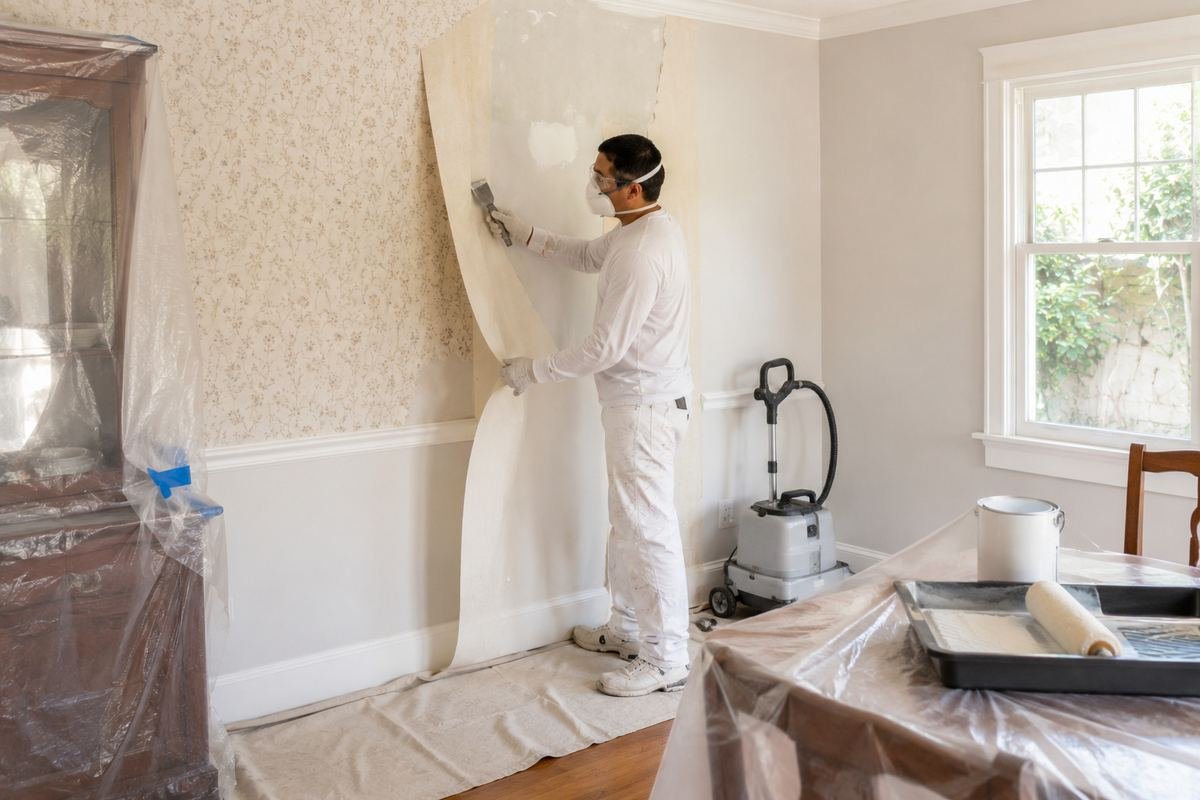
We identify the paper type, check for multiple layers, and assess the wall condition underneath by testing a discreet area rather than guessing from the surface.
Written scope
A plan covering the removal method, the expected repair, and the repaint scope, so the wall repair is not a surprise added halfway through.
Stripping
Steam, chemical release agents or dry-strip methods depending on the paper, with the wall surface protected as the priority over speed.
Wall repair
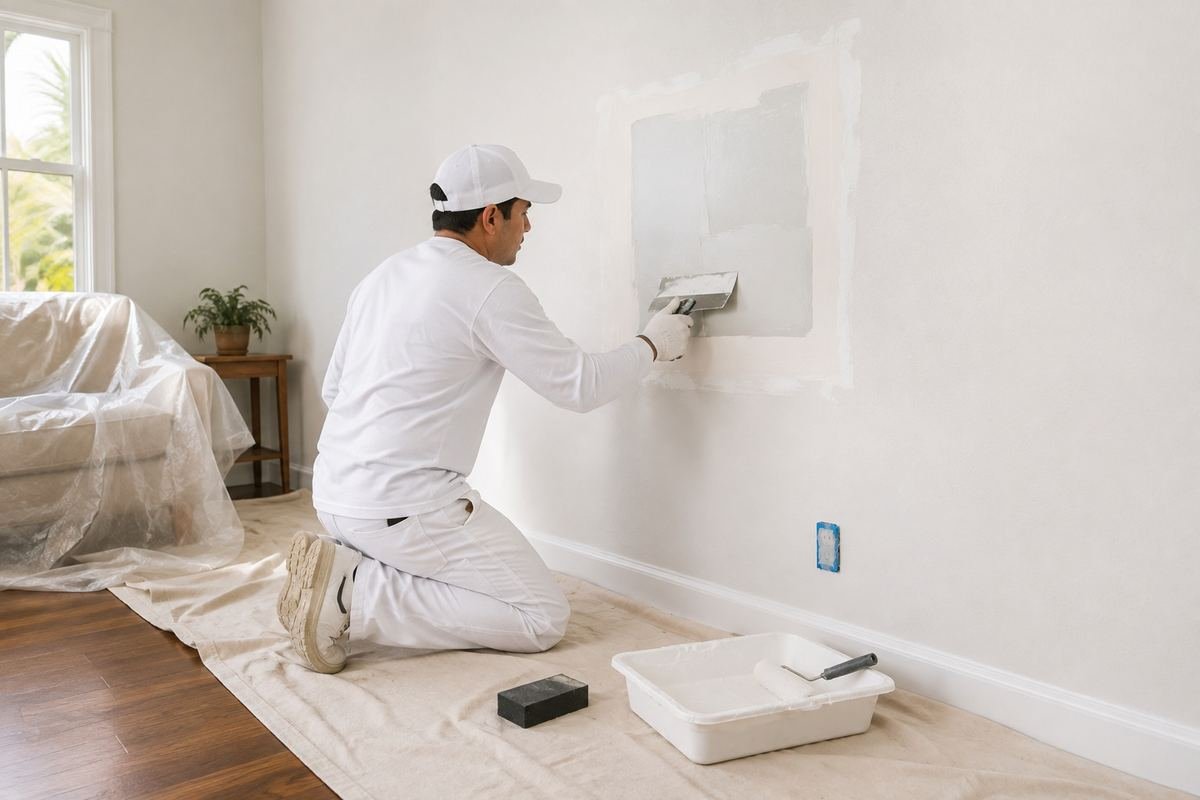
Patching, taping, joint compound and a skim coat where needed, so old texture or adhesive shadow does not flash through the new paint.
Priming and painting
A stain-blocking primer wherever residue or old colour could bleed, then the finish coats in your chosen colour and sheen.
Final walk-through
Every wall checked with you in good light, because adhesive shadow and seam ghosting show up at an angle rather than head on.
04
Frequently asked questions about wallpaper removal
What drives the scope on a wallpaper removal job?
Wall area, the number of layers, the type of wallcovering, the condition of the plaster or board underneath, and the finish chosen for the repaint. A single accent wall in prepasted vinyl is a straightforward job. Three layers over old plaster in a whole house is a different project, and the walk-through is what separates the two before anything is committed to.
Will removing wallpaper damage my walls?
It can, if the method does not match the paper. That is exactly why the type gets identified first and the stripping approach is matched to it. Some damage is normal even done properly, particularly where a previous removal attempt has already torn the paper face, and any damage that does occur is patched and skimmed before painting so it disappears under the finish.
Do I need a skim coat after removal?
Not always. Walls in good condition with minor residue often need only patching and a stain-blocking primer. Walls with heavier damage, old plaster, or torn paper backing left behind usually need a lining-paper or joint-compound skim coat to get a genuinely smooth, paint-ready surface. We tell you which case you are in once the paper is off, not before.
Can you handle several layers of old wallpaper?
Yes, and it is common in the older Pasadena and South Pasadena housing. Layers change the method and the time rather than the feasibility. Lower layers are often bonded harder than the top one, so stripping runs in stages and the wall is assessed again between them.
How far out is scheduling for a wallpaper removal project?
Scheduling varies by season and current workload, and most interior wallpaper projects can be booked within a couple of weeks of the estimate. Interior work is less weather-dependent than exterior, so the winter months are often the easiest time to get an interior project in.
Can you match my existing paint colour afterwards?
We can colour-match for touch-ups, though on a stripped wall we normally recommend repainting the whole wall or room instead. A repaired and reprimed area has different porosity from decades-old paint around it, so even a perfect colour match will read as a patch in the sheen.
Do you paint the ceiling and trim at the same time?
Usually, and it is worth doing. The room is already protected, the crew is already there, and a fresh wall against a tired ceiling tends to make the ceiling look worse than it did before. Ceiling work is covered on the ceiling painting page.
Is there a guarantee on the finished paint?
Coverage on a repaint over stripped walls is written into the estimate documentation and governed by our terms of service, not summarised here. Your estimator will explain what applies to your project before work begins.
05
Related painting services
Removal almost always leads straight into other interior work.
- Drywall Repair & Painting
- Interior House Painting
- Ceiling Painting
- Venetian Plaster & Specialty Finishes
- Kitchen Cabinet Painting
- Apartment Turnover Painting
Painting service areas
Wallpaper removal and interior repainting across every community we cover around Pasadena.
Get smooth, paint-ready walls
Old wallpaper does not improve with time, and neither does adhesive that has been drying out for decades.
- Free written estimate
- Repair scope named before stripping starts
- Licensed, insured and bonded